Steam Playtest Live · App ID 4780630
[ T ]
TILEZ
[ Z ]
Every tile is a tiny machine. Snap them together to build circuits, factories, board games, and entire worlds.
Inspired by Minecraft Redstone, LEGO, and Tabletop Simulator.
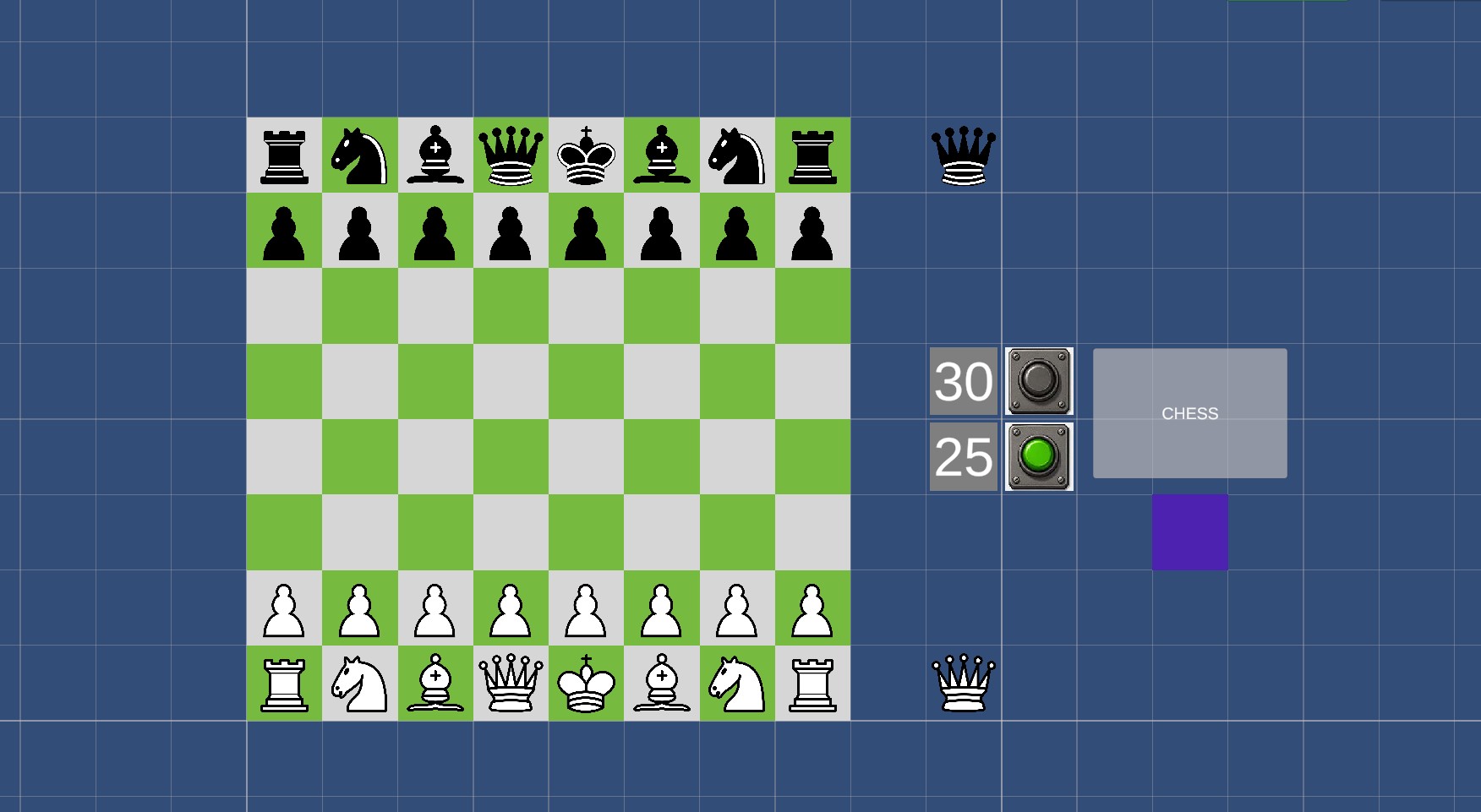
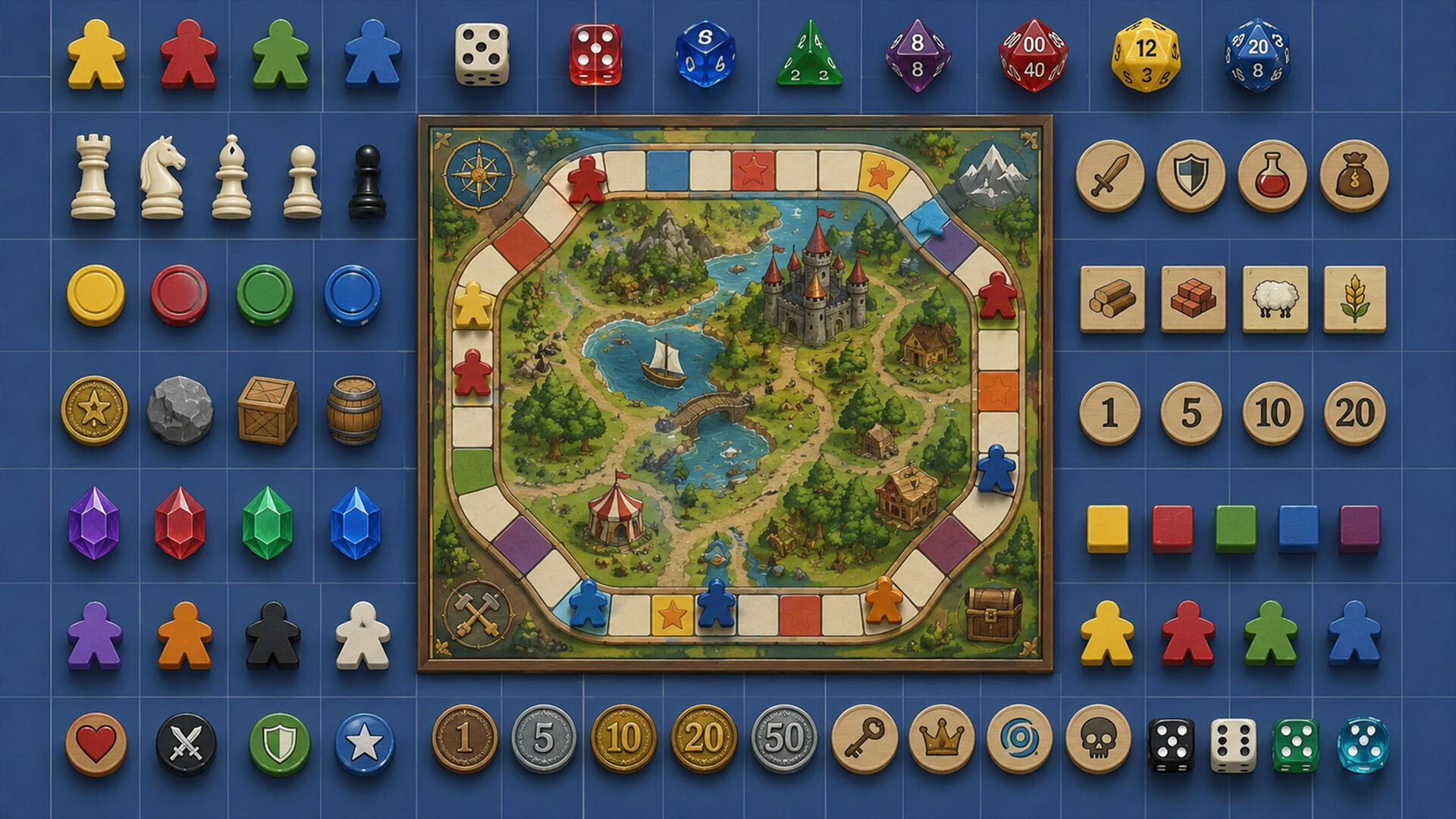
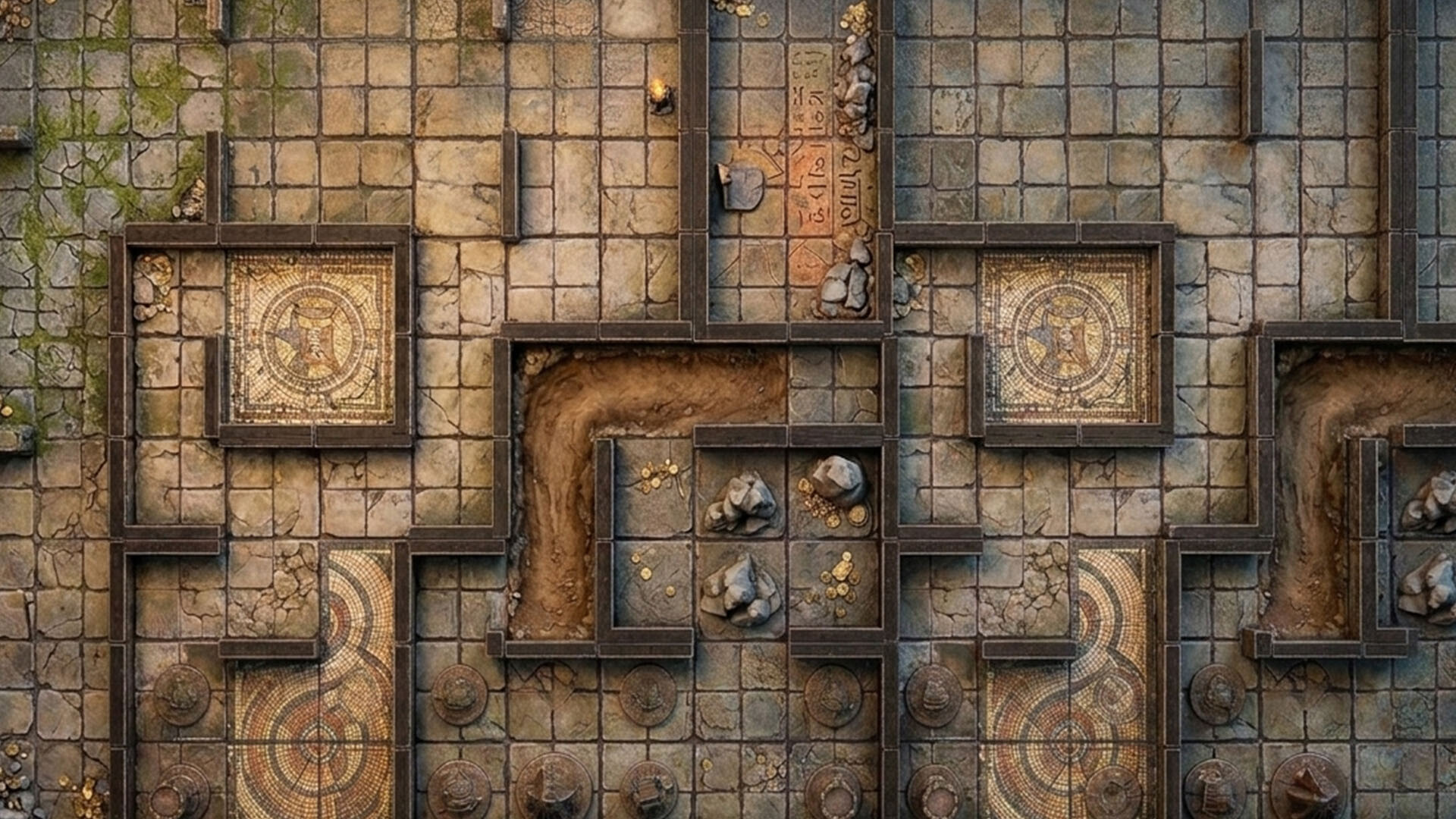
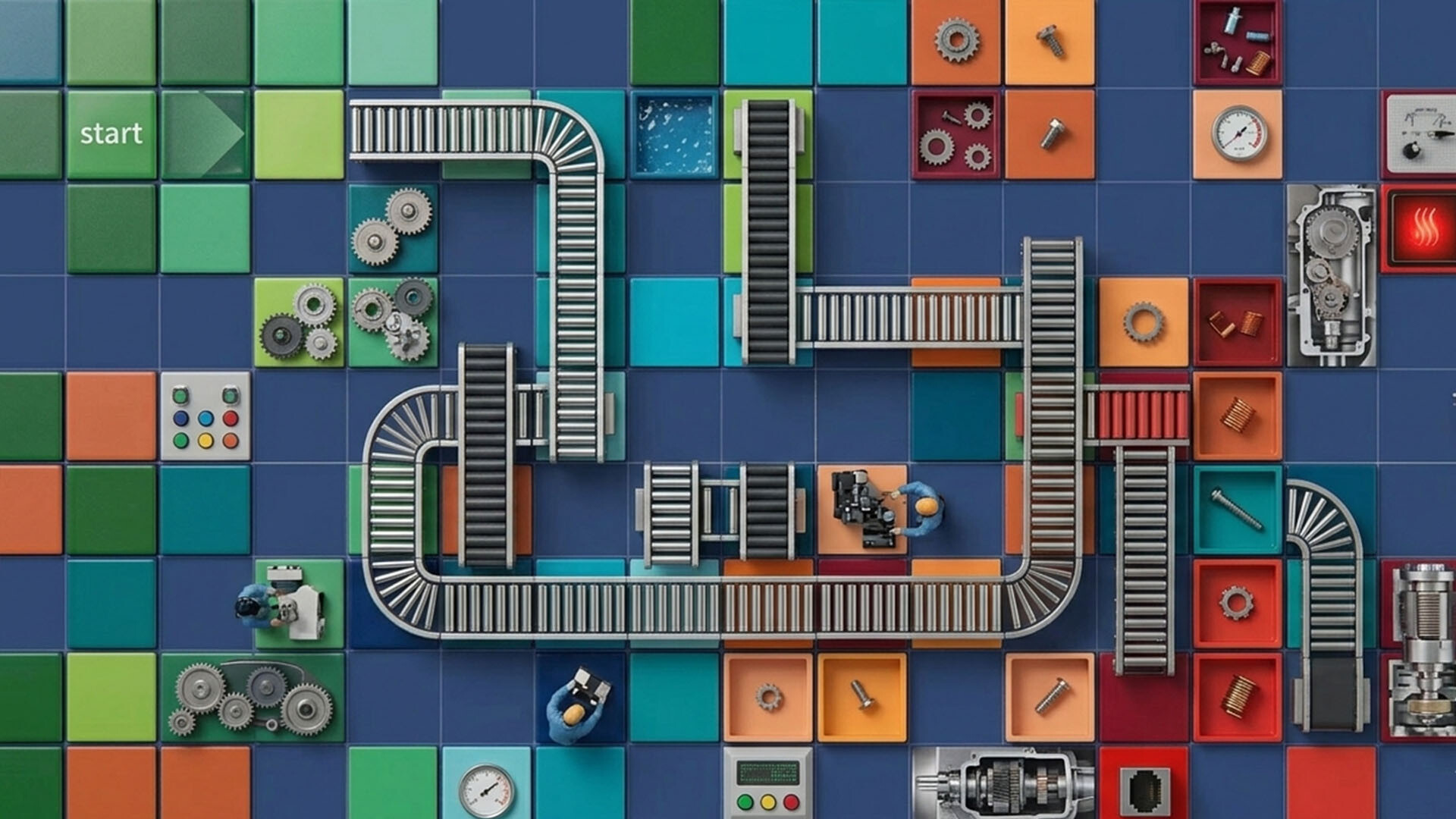
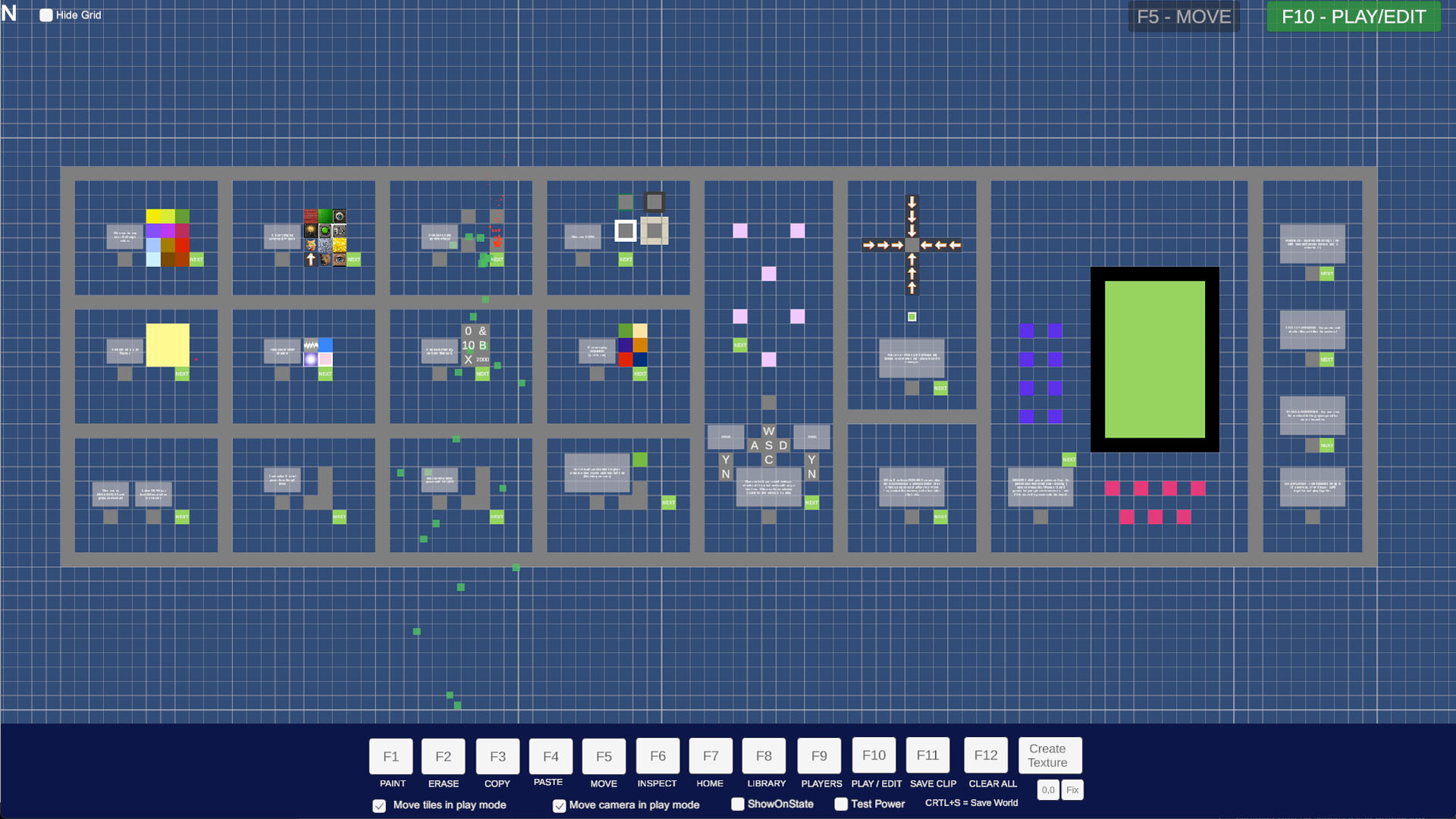
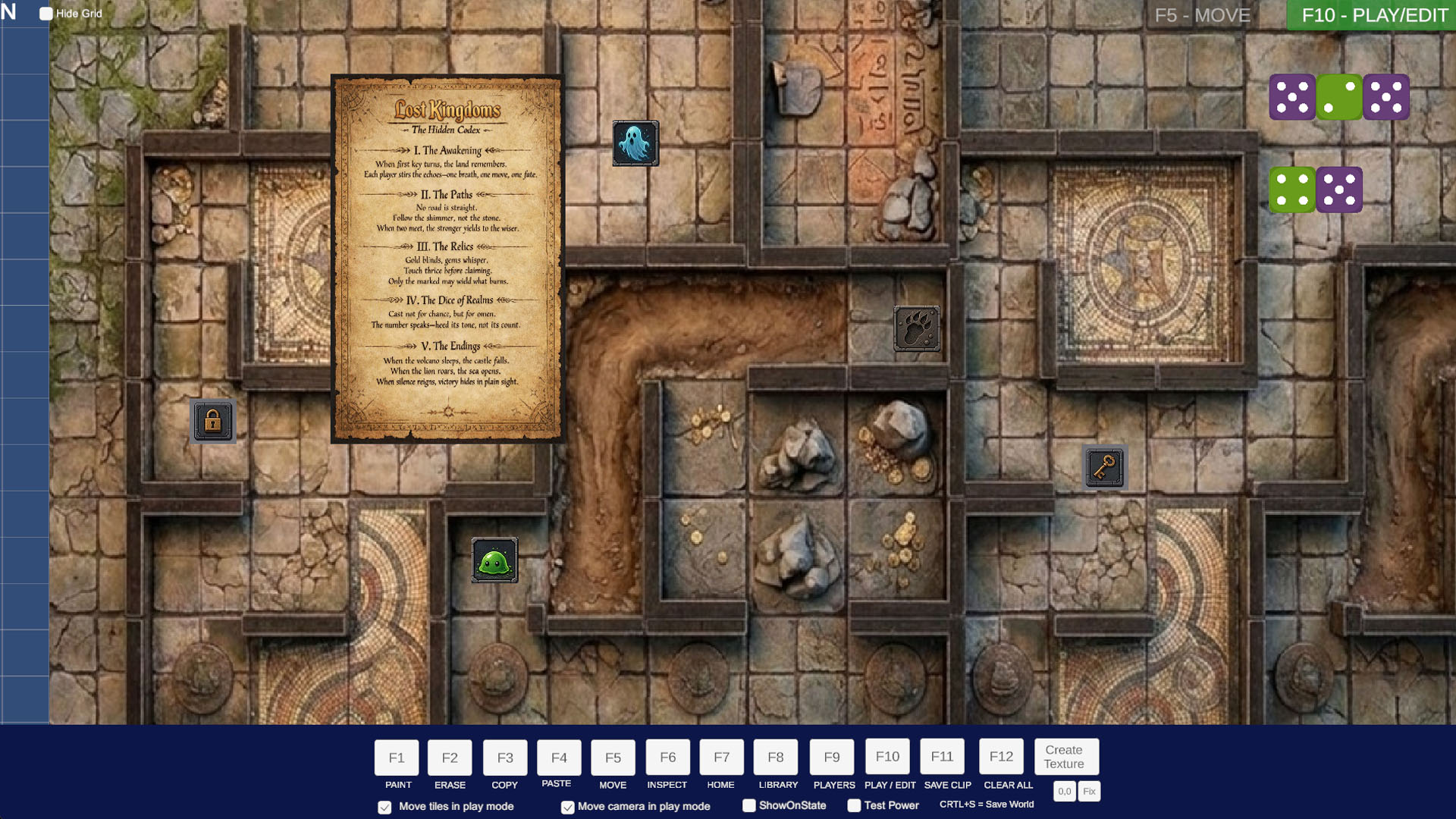
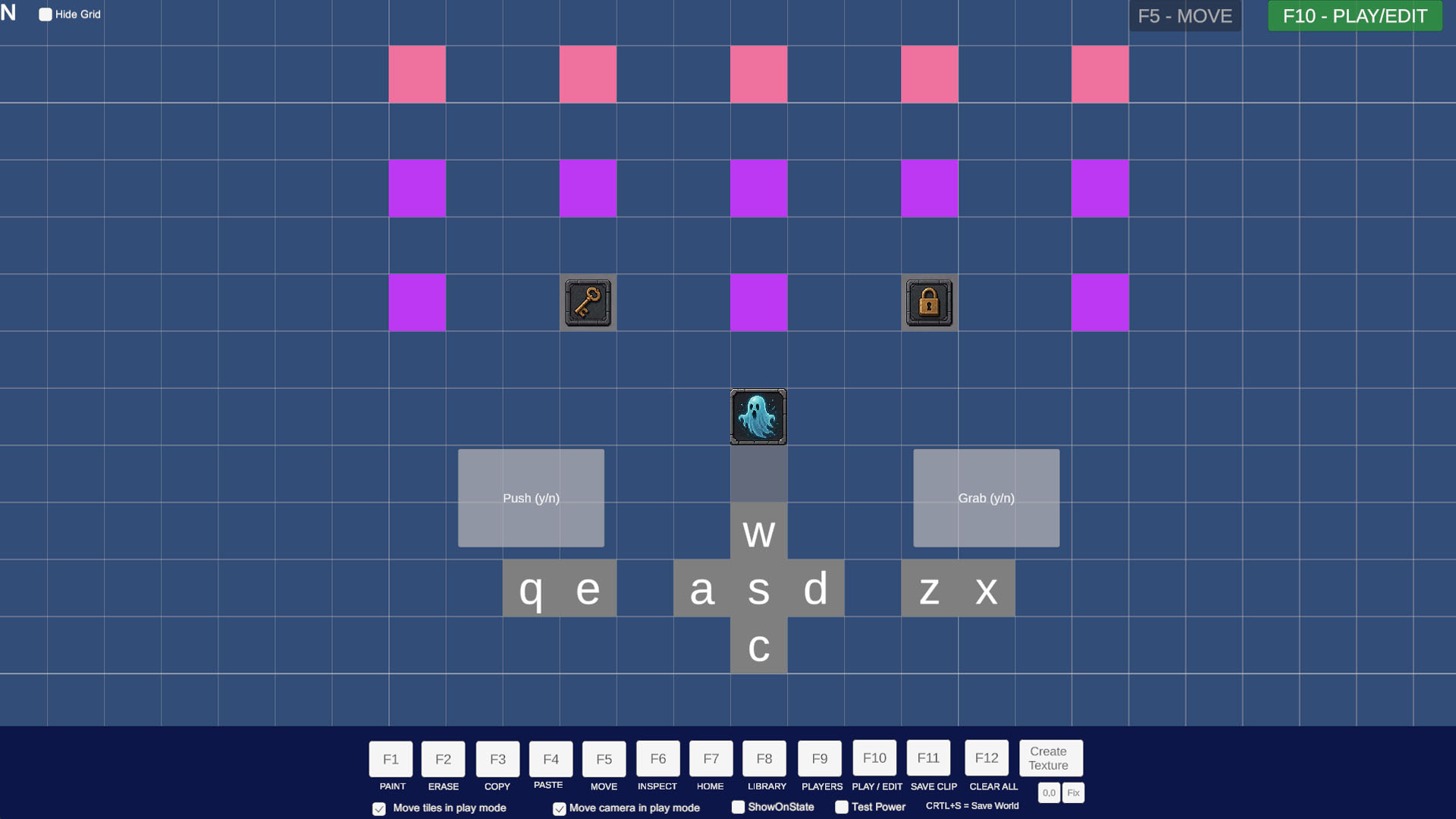
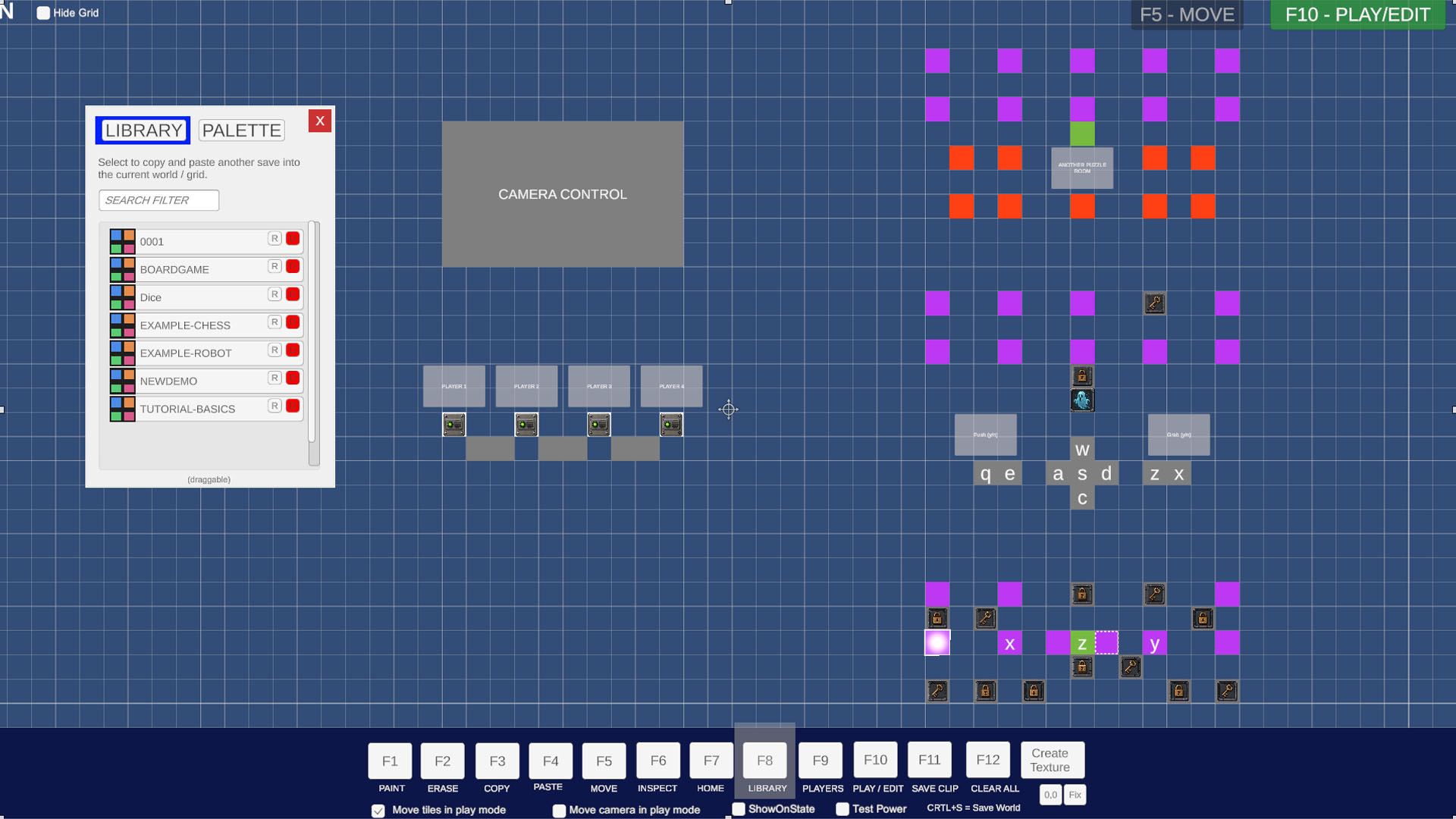
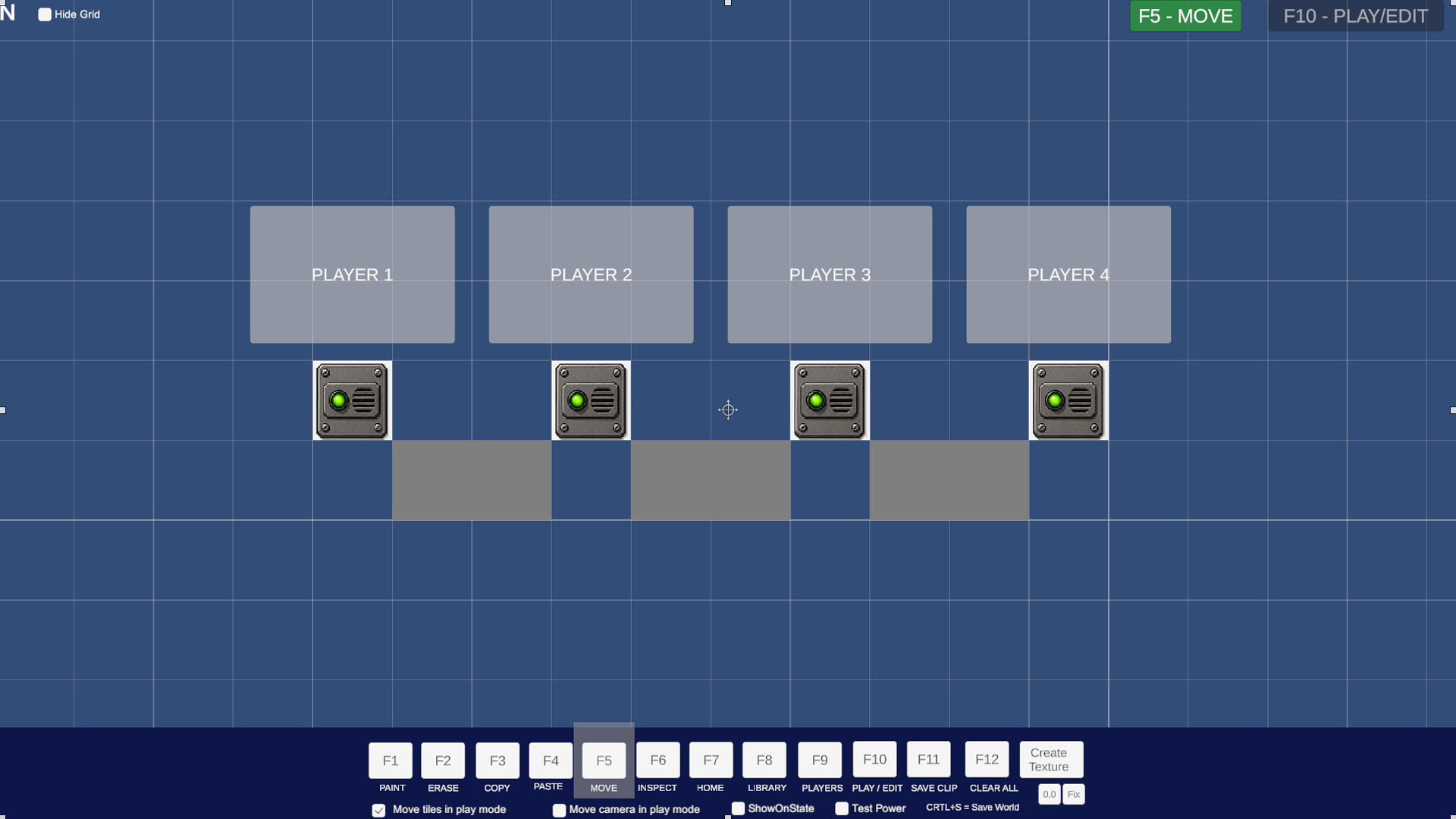
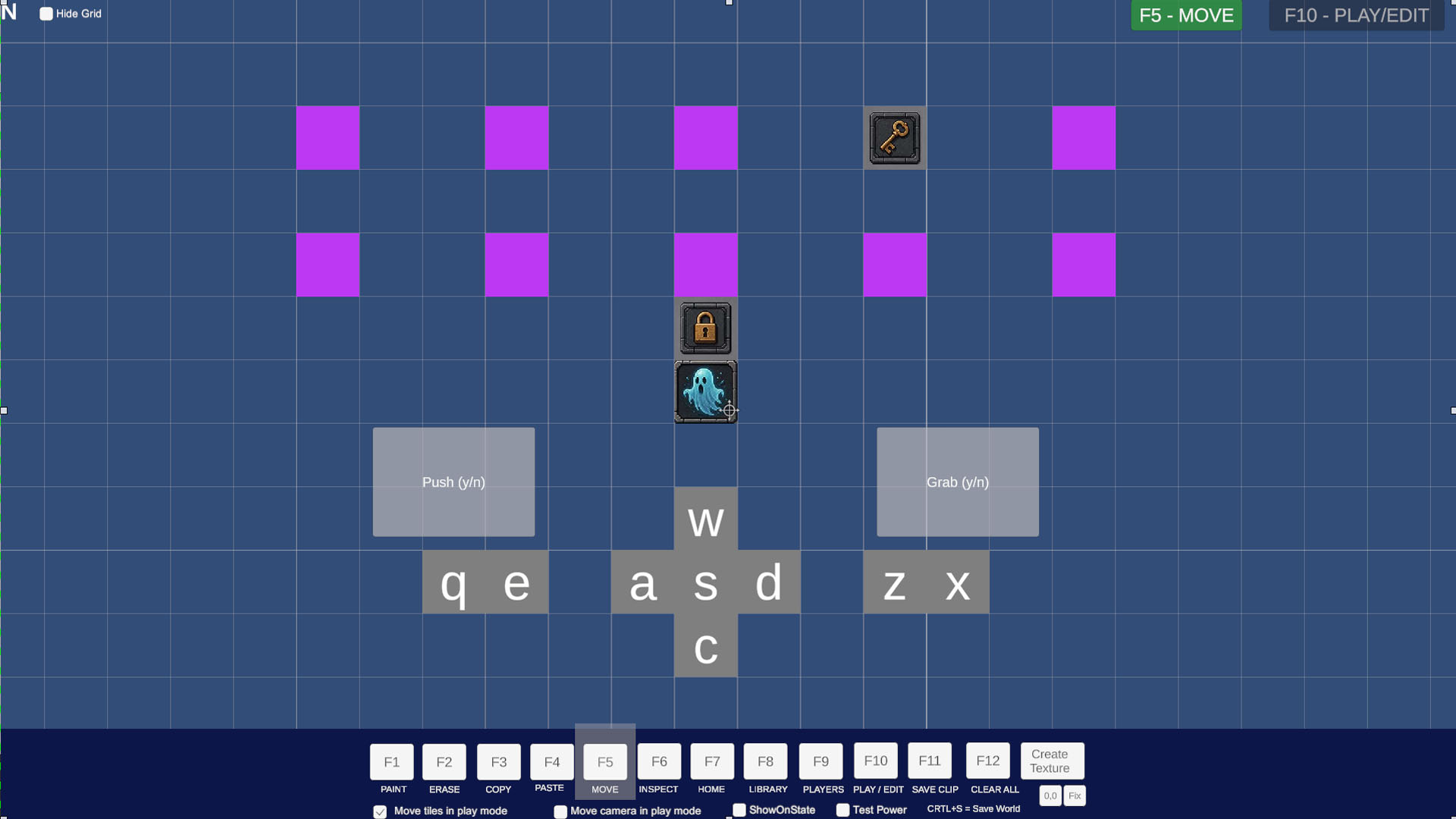
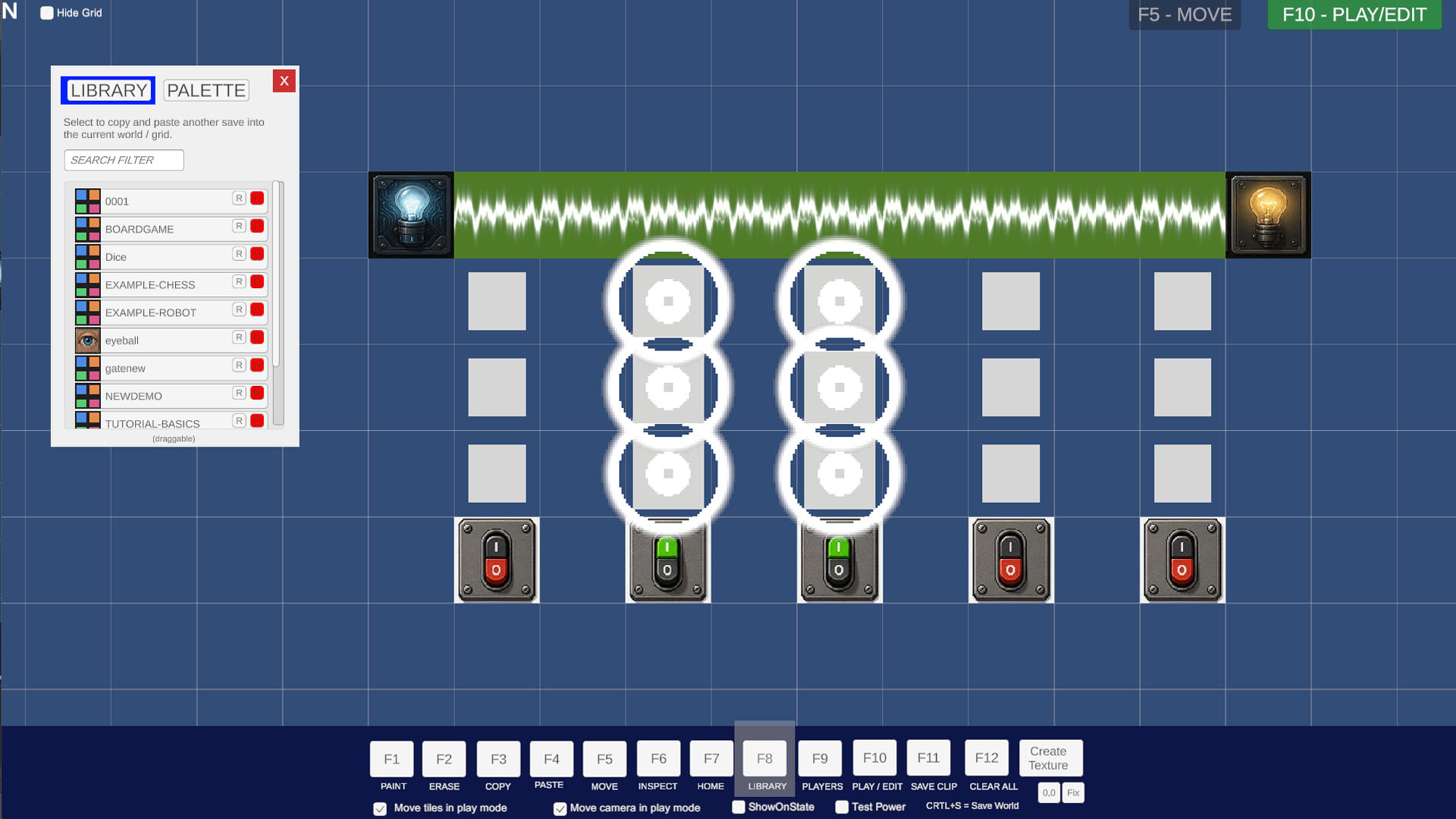
Every tile is a tiny machine. Snap them together to build circuits, factories, board games, and entire worlds.
Inspired by Minecraft Redstone, LEGO, and Tabletop Simulator.
TILEZ is a 2D creative sandbox where every square on an infinite grid can become a tiny, programmable machine. Place tiles, connect them, and watch cause and effect play out live — no scripts, no code editors. You flip switches and wire things up right on the board.
The same handful of simple rules can grow into anything: a working light switch, a factory line, a full board game with dice and cards, or a computer built entirely out of tiles. Learn how one tile behaves and you already understand most of the game.
Play solo at your own pace, or invite friends into the same world in real time. Whatever you build — a puzzle, a machine, a game — it's genuinely playable, and genuinely yours.
TILEZ isn't a clone of anything. It blends the best parts of automation games, creative sandboxes, and tabletop platforms into one unified toy box — with a natural home for board games that almost nothing else offers.
Most automation and logic games hide their guts behind menus, scripts, and code. TILEZ keeps everything on the grid, out in the open. You watch power flow, signals fire, and machines move in real time — approachable for kids, newcomers, and anyone who's bounced off "coding" games before.
Pack a complicated circuit into a single reusable block called a Module, then drop copies of it anywhere — even inside other modules. Capture any image in-game and turn it into a custom tile texture. Stack tiles on top of each other to hide wiring, build card decks, or layer detail without cluttering your build.
There's no final level to beat. Players keep discovering builds and tricks nobody planned for, share them with each other, and push the system further than the developer ever imagined. The game keeps growing as its community does.
Host a world with a single Join Code — no port forwarding, no network setup, no headaches. Everyone shares the same live world with their own camera and cursor, and it stays smooth even in massive, busy builds.
Tiles, signals, and physical movement map naturally onto the pieces of almost any tabletop game — dice, cards, boards, turn order, win conditions. Unlike physics-based tabletop simulators that fight you with clunky, unpredictable controls, rules in TILEZ are baked directly into the tiles. Friends can jump in and just start playing.
Most "educational" games feel like homework with a game skin. TILEZ teaches cause and effect, logic, and problem-solving simply by being fun to play — no lesson plan required. It's why it works so well for curious kids and lifelong tinkerers alike.
There's no set genre or goal. TILEZ gives you the pieces — what you make with them is entirely up to you.
TILEZ is engineered for massive scalability and production stability, leveraging a highly optimized structural logic module framework developed within the Unity engine. It processes complex logic density seamlessly while preserving core frame rates.
The core power propagation mechanics and data models have been intensely optimized. By migrating from a standard string-tag lookup method to an efficient integer ID registry, and refactoring GridManager dictionaries and SignalSystem scripts in C#, the simulation eliminates per-frame garbage collection and scales processing capacity massively.
A custom-built snapshot world state save system handles all transitions between editing modes and live play simulations. This guarantees reliable state management, rapid undo/redo chains, and crash-safe reliability across complicated layered worlds.
Visual customization is virtually infinite thanks to an integrated isDecor performance-exclusion flag. This allows purely visual and layered tabletop elements (like card decks) to carry zero CPU simulation cost.
The Unity-based architecture integrates a scalable asset workflow featuring custom material dropdown controls and asset picker interfaces. This makes DLC expansions, user-generated custom textures, and visual shaders highly extensible.
Multiplayer is built on host-authoritative architecture utilizing client-side prediction and delta mutation streaming. Spatial interest management streams only what's visible, enabling smooth networking even in massive logic builds.
TILEZ captures multiple proven adjacent markets: logic builders, educators, and creative tinkerers. By encoding rules directly into tile logic rather than relying on clunky physics simulators, it provides an unprecedented, underserved home for digital board games and tabletop RPGs.
For the last ten years, home has been the back of my vehicle — living a minimalistic life and chasing warmer weather. I've played games my whole life: video games, board games, and the deep strategic ones.
As a homeschooling father of two, Minecraft Redstone became a staple of our curriculum. There's no better way to teach a circuit than letting someone build one, break it, and try again.
TILEZ started as an attempt to make that teaching tool even better, and give my kids some refresher lessons. I kept adding features so the lessons could go further — more logic, more ways to see cause and effect. Eventually my little tiles grew into something entirely new so they can now, not only help us learn, but let us play too!
Games have given me so much over the years. TILEZ is my way of giving something back.
Another way to learn, create, and play together.
~ Martin Winters — Creator
TILEZ is live in Steam playtest right now, and your feedback directly shapes where it goes next. Wishlist it, jump in, and see what you make.
LOOKING FOR COMMUNITY CREATIONS
I am looking for screenshots, cool builds, custom tile sets, gifs, tutorials, etc. that I could add to my Steam page and include in the final game.
FULL CREDITS (in game) to you and your CHANNEL!
(and I'll toss in a FREE STEAM KEY)